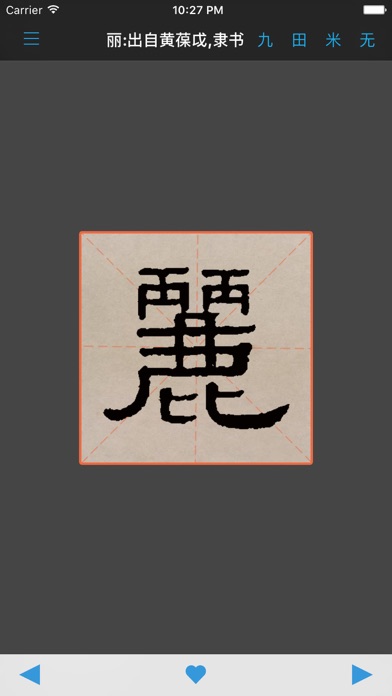
隶书书法字典:上千书法名家和碑帖
慕华 齐EducationApp Store隶书书法字典:上千书法名家和碑帖 revenue and downloads, last 30 days
How we got this (12 inputs)
- signals
- ratings ÷ age
- ratings/day
- 0
- monetisation
- education ARPD 1.2; IAP not collected yet
- bound
- revenue per download ceiling: $15/download × downloads high (modelled downloads)
- range
- 80% interval from out-of-fold residuals (×1.12 scale, 90 products)
- likelyLow
- 85.98
- likelyHigh
- 303.3
- observed days (of 30)
- 6
- bound
- revenue per download ceiling at the downloads mid: at most $15 per download × 11 downloads (the 30-day downloads mid); the window's revenue read 1.69x more
- low confidence because
- the figure rests on the revenue-per-download ceiling (an assumption), not on a revenue signal
- confidence
- low
- rough
- order of magnitude
As of Nov 21, 2026.
How we got this (14 inputs)
- signals
- ratings ÷ age ÷ ratings per download; lifetime→current drift ×/÷4.12 (135278 measured Play counter deltas)
- spread
- measured on downloads ground truth (downloads ground truth: 48 App Store milestones, 33 platform splits, 13 drift points)
- ratings
- 16
- ratings/day
- 0
- ratings per download
- 0.015 (non-games, measured on 44 products)
- range scale
- ×0.88 (coverage scale on 9 ground-truth rows; publication is decided before it)
- note
- outer range 63x: only a lifetime signal; a rating-count change between days, dated reviews or a free-chart position would narrow it
- likelyLow
- 3
- likelyHigh
- 36
- confidence
- low
- rough
- order of magnitude
- observed days (of 30)
- 6
- measured days
- 0
- scaling
- observed days, scaled to 30
As of Nov 21, 2026.
How we got this (13 inputs)
- method
- installs in the window (all active on install day) + earlier installers active in the month (published retention ÷ the category's DAU/MAU stickiness) + the retained base of installers older than two years
- downloads per day
- 0.37 (0.03 to 3.4, the published worldwide figure)
- retention
- day 1 / 7 / 30: 24.32% / 8.45% / 3.77% (iOS benchmark × 1.02 for the category; AppsFlyer Q3 2024 day-1/7/30 retention, via getstream.io/blog/app-retention-guide (read 2026-11-16); category: OneSignal 2024 day-30 retention by category, via getstream.io/blog/app-retention-guide (read 2026-11-16))
- active days per install
- 10.56 over 730 days (age 4182 days; the curve is used to 730)
- stickiness
- 12.6% DAU/MAU, Education & Knowledge median (MWM DAU/MAU medians, US iOS, May 2026 (mwm.ai/glossary/dau-mau, read 2026-11-16))
- parts
- window installs 11 (the published 30-day downloads), earlier installers 23, retained base 61
- retained base
- 726 installers older than 730 days (lifetime from 16 ratings ÷ 0.0161 ratings per download (non-games, measured on 44 App Store products)) × 8.46% active in a month (between 5.08%, the benchmark curve held flat, and 14.1%, median disclosed MAU ÷ lifetime installs of Duolingo, Snapchat and Grindr (company filings, data/ground-truth-active-users.csv; chosen on these rows, scored leave-one-product-out)); range ×/÷2 past each (widened after the leave-one-product-out check)
- spread
- downloads ×/÷10.1, retention ×/÷3, tail ×/÷1.69, stickiness ×/÷1.8, retained base ×/÷9.25 (assumptions; not fitted)
- ratings per download (recorded, not used)
- 0.01196
- chart persistence (recorded, not used)
- 0 day(s) on a chart in the window; fewer than 7 live days exist
- tier
- modelled: retention and stickiness are published benchmarks, not measured on this listing
- confidence
- low
- rough
- order of magnitude
As of Nov 21, 2026.
Daily active users
Modelled from this app's downloads and a published retention curve for its store and category, not measured. Read it as an order of magnitude.
History
Daily readings as we observed them, last 30 days worldwide. Free shows the last 30 days.
One reading so far: history starts Nov 15, 2026, and a trend line appears after the next daily reading.
Downloads per day
Observed by us since Nov 15, 2026.
Revenue per day
Observed by us since Nov 15, 2026.
Monthly history: we have found no public-archive copy of this store page from the last 12 months, so monthly readings start with our own in Nov 2026.
Create a free account to save apps; Pro shows full history.
Chart positions
Where this app ranks on the top free, paid and grossing charts we capture.
Search terms
No search terms read for this app yet. Terms are read from its title and the searches it shows up in, and appear here once ranked.
In-app purchases
Prices
In-app purchase ladder, price changes and paywall terms
No in-app prices recorded yet. We read them from the store listing: either this app sells none, or its listing has not been read yet.
Ratings and reviews
Rating distribution
No rating distribution read yet.
Recent reviews
Marketing
Paid ads, organic videos and onboarding captured for this app.
Paid ads
No Meta, Google or TikTok ads tied to this app yet. We check the public ad libraries daily.
Organic videos
No YouTube, TikTok or Instagram videos tied to this app yet.
Change history
Versions, price changes, rank jumps and listing edits, as we observed them.
Details
- Developer
- 慕华 齐, 7 apps
- Bundle id
- ilearninging.lishuFree
- Category
- Education
- Price
- Free
- Released
- Jun 10, 2015
- Updated
- Apr 12, 2020
- Version
- 12.41
- Size
- 99.8 MB
- Content rating
- 4+
- Website
- Not available
- Contact email
- Not available
- Privacy policy
- Not available
- Languages (1)
- English
- Charted in
- United States, United Kingdom, Germany, France, Japan, Canada, Australia, South Korea, Thailand, Taiwan
- First seen
- Nov 15, 2026
- Listing read
- Nov 15, 2026
Show store descriptionShow less
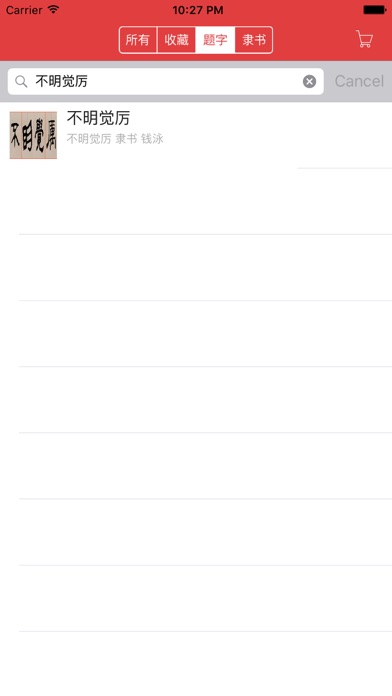
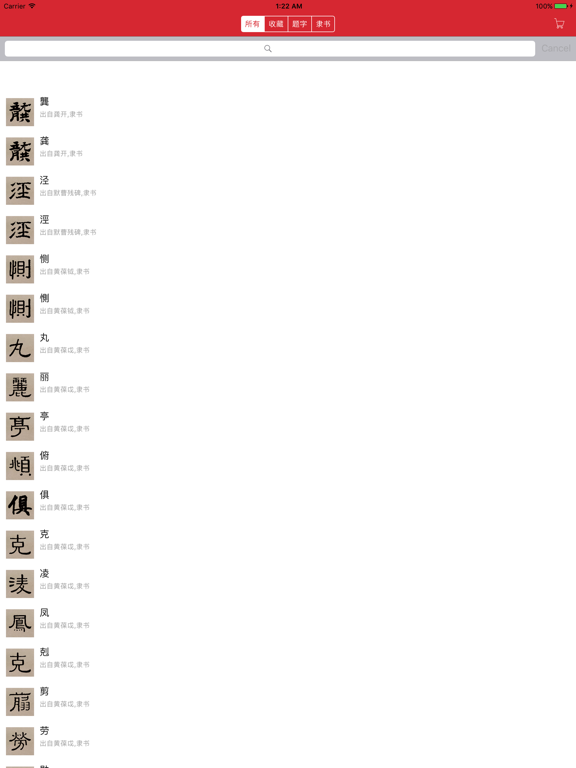
隶书书法字典:上千书法名家和碑帖 检索方便。 1.增加题字功能 2.增加米字格,田字格,九宫格。 新版新功能: 1.增加临摹功能 1.增加分享功能,可以导出图片。 2.性能提升 3.bug修复 隶书,亦称汉隶[1] ,是汉字中常见的一种庄重的字体,书写效果略微宽扁,横画长而直画短,呈长方形状,讲究“蚕头雁尾”、“一波三折”。隶书起源于秦朝,由程邈整理而成,在东汉时期达到顶峰,对后世书法有不可小觑的影响,书法界有“汉隶唐楷”之称。、 关于隶书的定义,近人吴伯陶先生一篇:《从出土秦简帛书看秦汉早期隶书》的文章中说道:“可以用这个字的本义来作解释。〈说文解字〉中解释‘隶’的意义是‘附着’,〈后汉书·冯异传〉则训为‘属’,这一意义到今天还在使用,现代汉语中就有‘隶属’一词。〈晋书·卫恒传〉、〈说文解字序〉及段注,也都认为隶书是‘佐助篆所不逮’的,所以隶书是小篆的一种辅助字体。” 其次究竟什么样子才叫隶,隶与篆又有什么样的严格区别,吴伯陶先生在上述的文章中又有所分析订定,这里再节录吴文中值得考虑的几小段。吴云∶“小篆还保存了象形字的遗意,画其成物随体诘屈;隶书就更进了一步,用笔画符号破坏了象形字的结腹,成为不象形的象形字”(他有字形举例,可参阅原文)。 他又说∶“小篆和隶书实际上是两个系统,标志着汉字发展的两大阶段。小篆是象形体古文字的结束,隶书是改象形为笔画化的新文字的开始。”“我们判断某种字体是否隶书,就要首先看它是否出现有破坏篆书结构失掉象形原意之处。” 吴先生经过仔细排比研究,得出那样的科学论据来,作为学术上篆、隶的不同定名的分野,自然是很值得重视的。不过还有两个问题想要问,那就是∶一,篆书也不能够个个是象形字,一开始就有象形以外的许多字存在,因此,仅仅失掉“象形原意”似乎有些不够。我的意思是说隶的破坏古文(“象形字”是一种字体的笼统名称,事实并非个个“象形”,例子甚多,不待列举),不仅仅是破坏象形而已。二,今天看到的从湖北云梦出土的秦简和湖南长沙马王堆墓中出土的简帛书中发现其中字的结构有变篆体,也有未变。用笔有圆有带长方的,那种字当时又称之为何名?这种“半篆半隶”的字形从秦昭襄王时代开始一直到西汉初(秦云梦简到汉马王堆帛书,吴文有详述可参阅)还存在,始皇帝以前,字还未有“体”的区别,可是到汉初,肯定那种字已经归入隶体,二者合起来考虑,那么对吴先生的区别篆体之名,是否有些矛盾了呢?事实上结构之变,光讲象形不象形,定然不够全面。我估计区别问题,在当时——在字体初变时一般人肯定还不太严格的,那种“蝙蝠式”的字形,大都随着新名称而名之——也称为隶,其中稍为保留些旧结构也是可以的。因此我认为如果设身处地来推测当时的命名,和今天用学术研究来区别的命名是可以有些距离的,是无足为怪的。明确地讲,篆与隶的不同除形象变为符号以外,还有笔法变化一方面的区别,例如∶生(篆)、上(变笔法未变结构)、之(笔法结构全变)。三字的名实异同,决非单论结构,其他相似的情况也很不少,可以类推。 西汉中期以来,隶书的脱去篆体(包括结构、笔画的写法)而独立的形式,已经完全形成。所见有代表性的例如本世纪出现于西陲流沙中的西汉宣帝五凤元年(前57)、成帝河平元年(前28)、新莽始建国天凤元年(14)的书简、乐浪汉墓出土的西汉平帝元始四年(4)、东汉明帝永平十二年(69)的漆盘上的铭文等等,不但结构全变,从字形来讲也全成方形或扁方形,笔势则长波更自然横出,和接近篆体的直垂形大大不同了。 相像的字形还能在东汉的碑刻中见到很多。最著名的如桓帝延熹八年(165)的《华山庙碑》、灵帝建宁二年(169)的《史晨碑》、中平二年(185)的(曹全碑)、又三年(186)的(张迁碑)等等,其他不再一一例举了。 同时在西汉的碑刻中也还有一些面积大都方正或个别字带长形,又仅有极短的波势的字体,其有代表性的所见如∶西汉宣帝五凤二年(前56)的《鲁孝王刻石》、东汉安帝元初四年(117)的《祀三公山碑》、顺帝永和二年(137)的《敦煌太守裴岑纪功碑》、灵帝建宁三年(170)的《郙阁颂》摩崖石刻、以至明帝永平九年(66)字形不大规则的《开通褎斜道》摩崖石刻等等。以上那些基本上已消灭篆体而形式稍有小异的“正体字”,一直流行于两汉、三国间,而且几乎独占了石刻碑志中的位置。在江苏省南京市出土了东晋谢鲲的墓志,还能见到用的仍是这样的字体。这种字体应当说都是隶,因为其形式自秦到汉,虽有些变化,但并不太大。从字形的面积上讲∶先带长方,后变方扁,有些地方还交叉互用着。长波、短波,也同样是交叉互用不分前后的。因此决不能说它是一种字体彻底变为另一种字体的新旧二体,而是一种字体在前前后后中间的个别量变罢了。
More like this
- Top Education on App Store by estimated revenue
- 隶书书法字典:上千书法名家和碑帖 alternatives
- 隶书书法字典:上千书法名家和碑帖 vs Dine Bizaad
- 隶书书法字典:上千书法名家和碑帖 vs FloraQuest: Carolinas, Georgia
- All top charts and categories
Similar apps
 Dine BizaadAlbert Haskie3.8 ★ (16)
 FloraQuest: Carolinas, GeorgiaHigh Country Apps, LLC5.0 ★ (16)
 FischFit: Angelschein lernenLeon Jokic5.0 ★ (16)
 CS WizardMacauley Treleaven4.9 ★ (16)
 Drivio: Führerschein 2027Ocean Float Mobile4.8 ★ (16)
 ABA AntitrustAmerican Bar Association3.8 ★ (16)
 Learn Swift: Build iOS AppsMEHMET CANKER (TR)4.6 ★ (16)
 Little LunchAustralian Children's Television Foundation4.4 ★ (16)